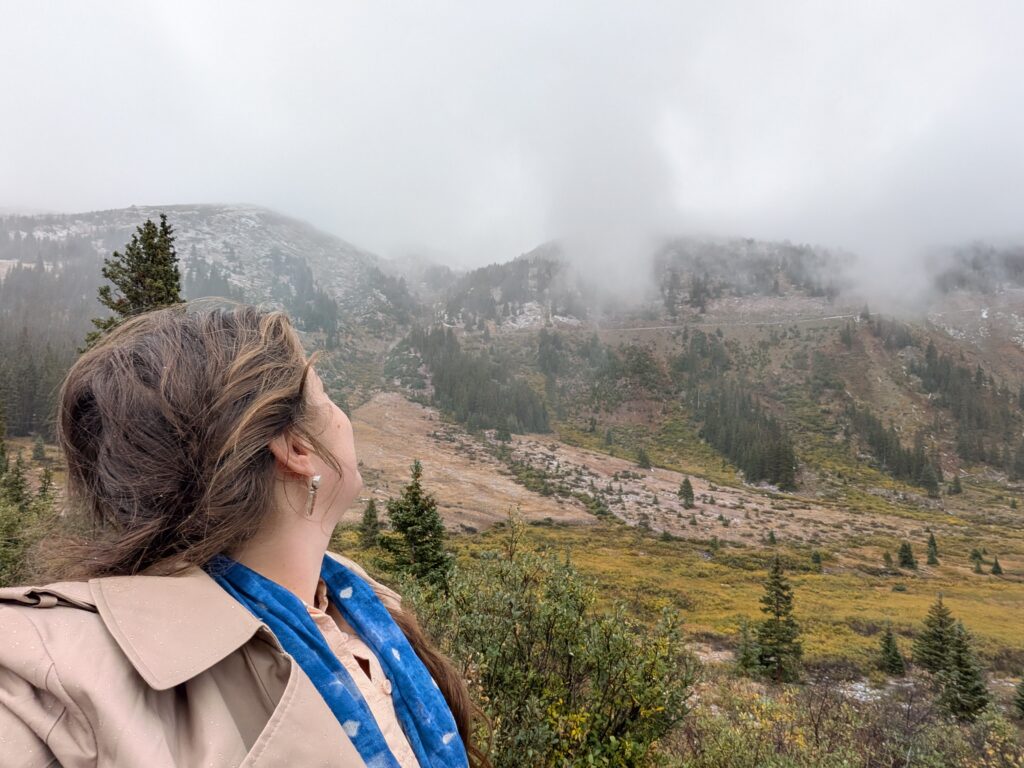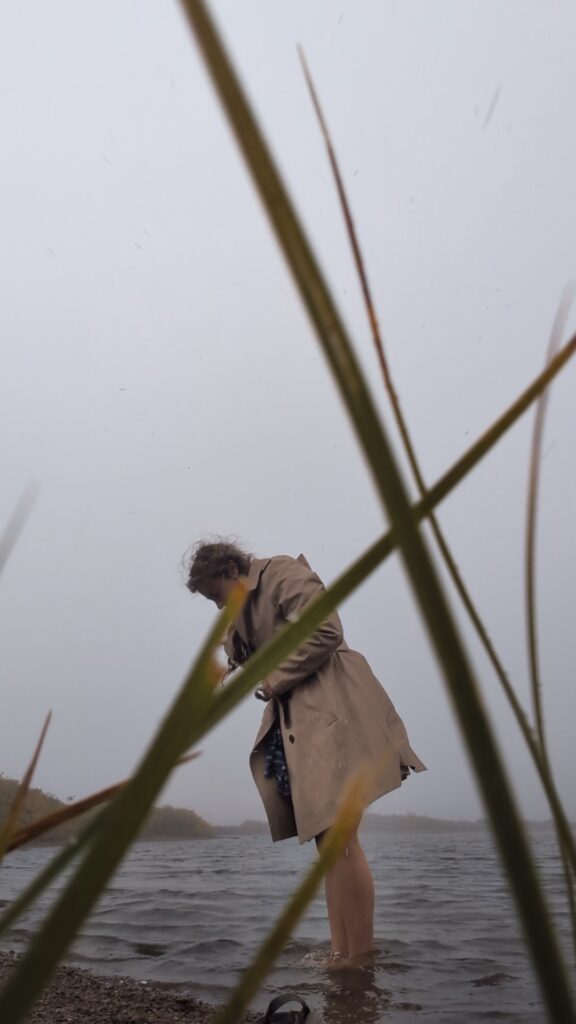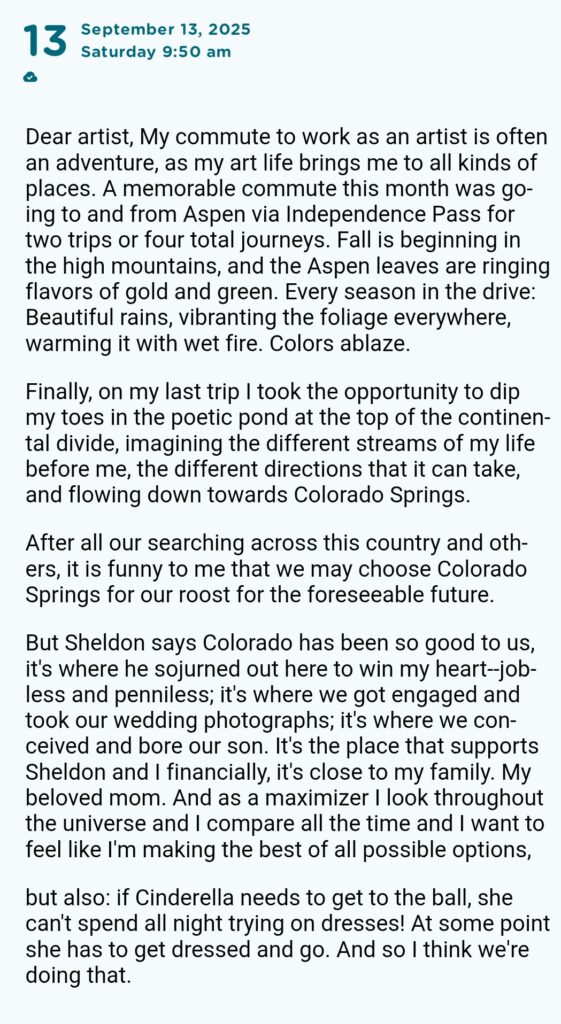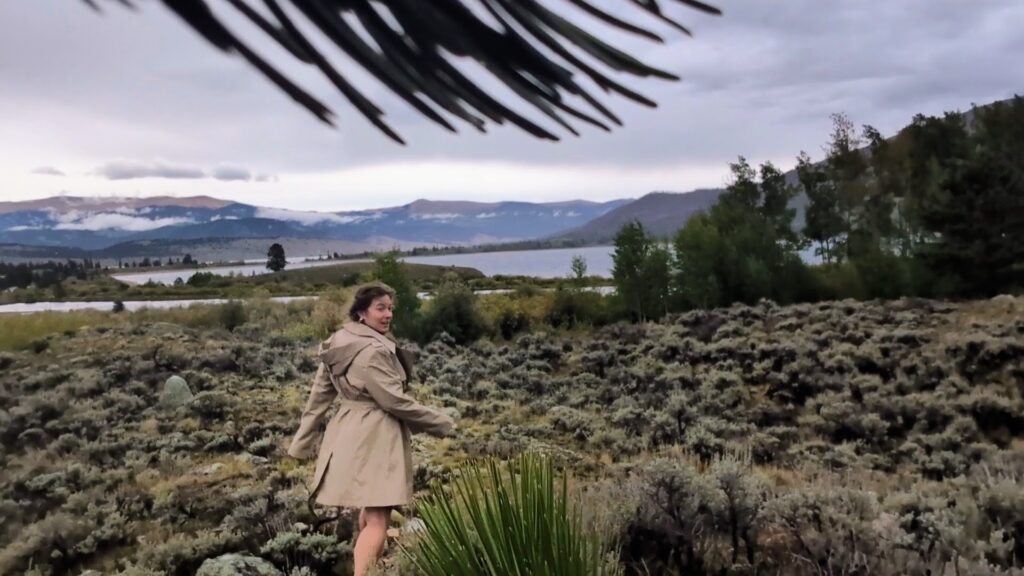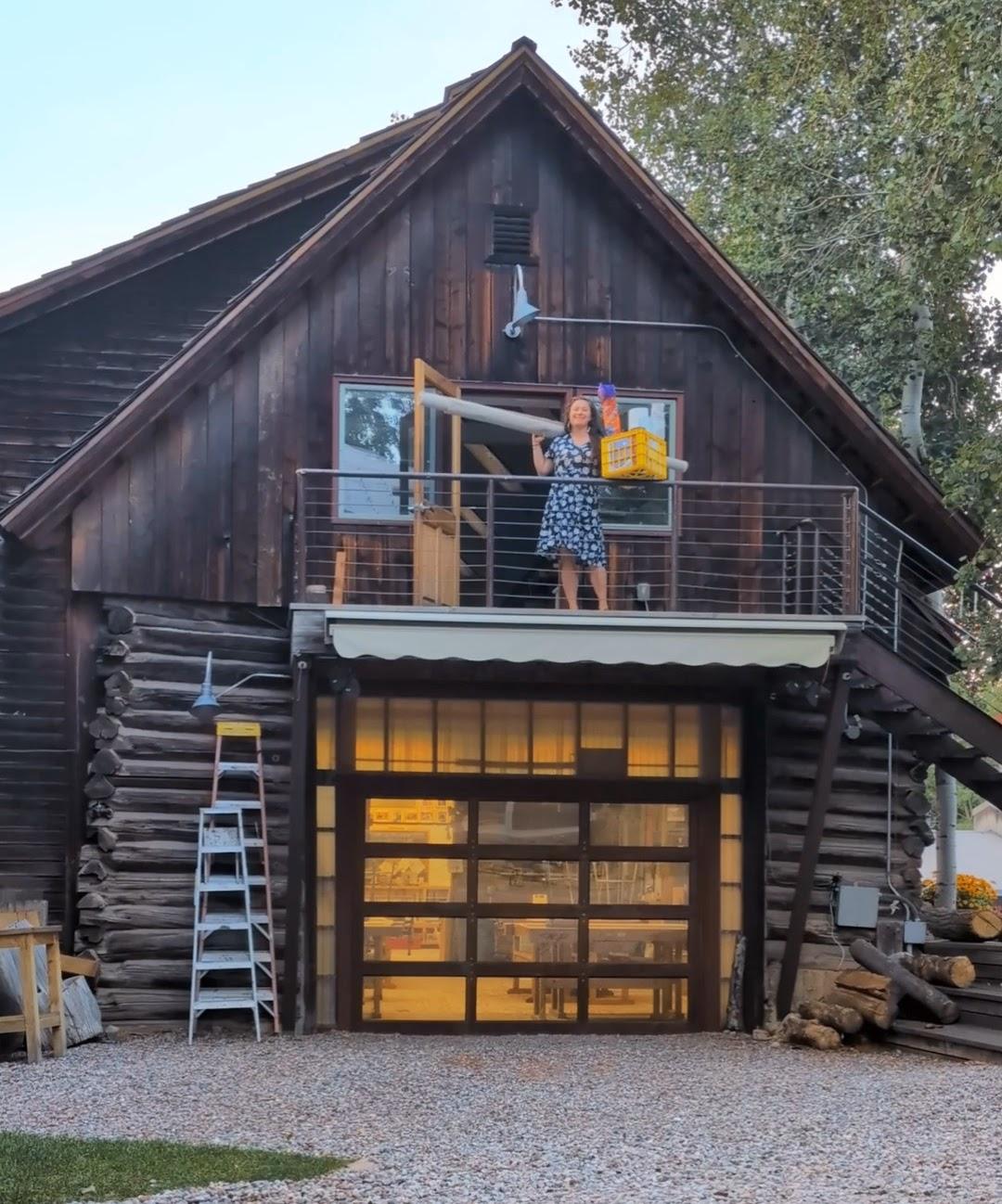
I packed Shel’s car full with a mobile studio setup, including finished and mid-process pieces, tools and materials, and lots of scraps. Here I am in one of the many trips loading and unloading.
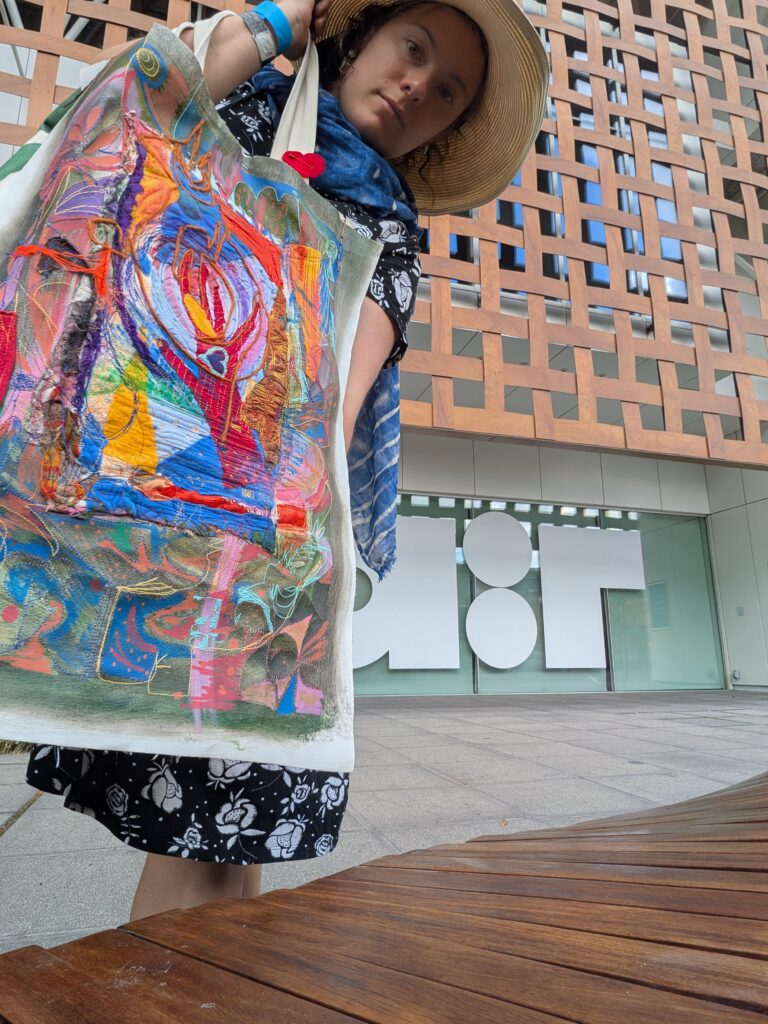
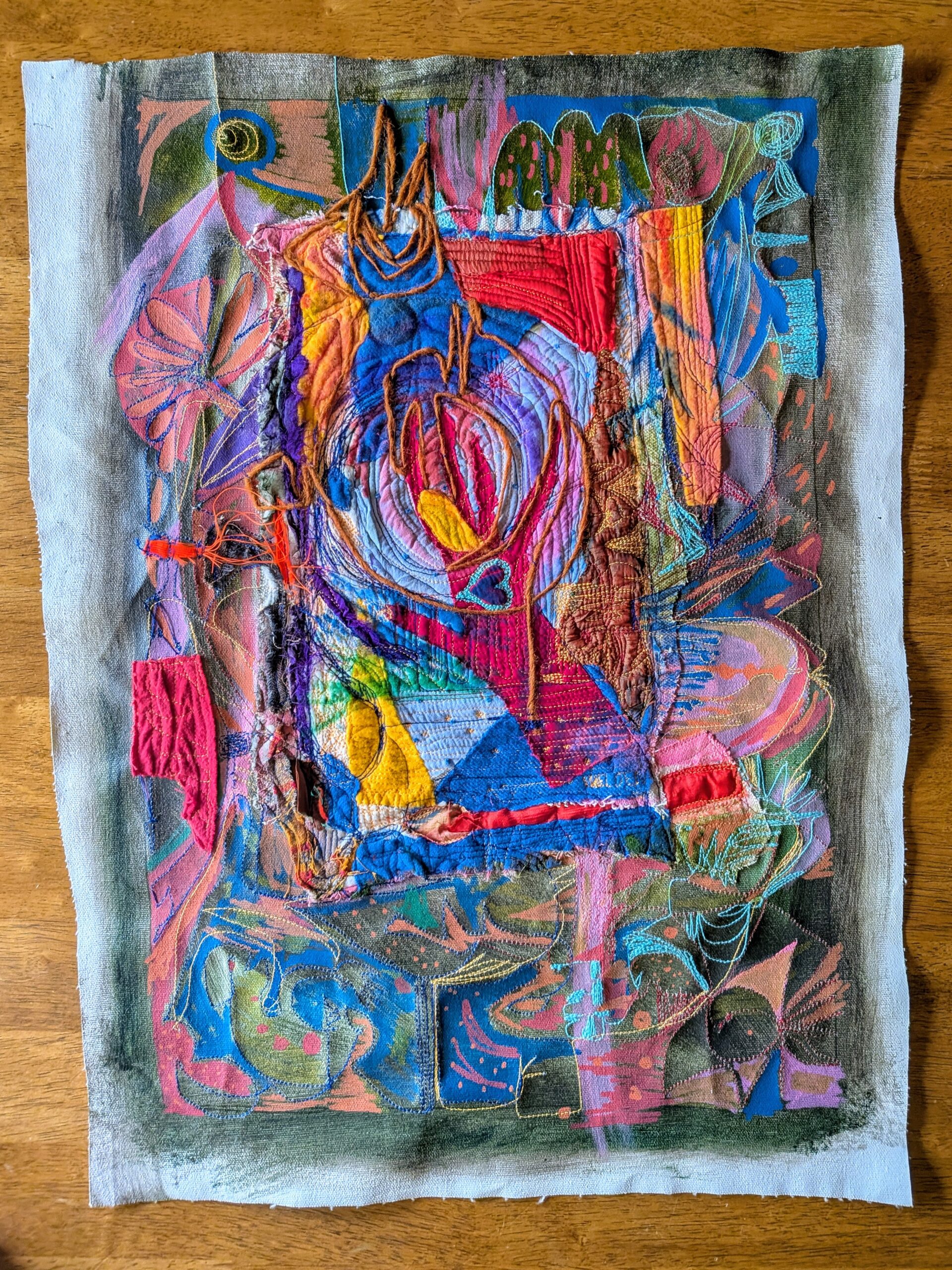
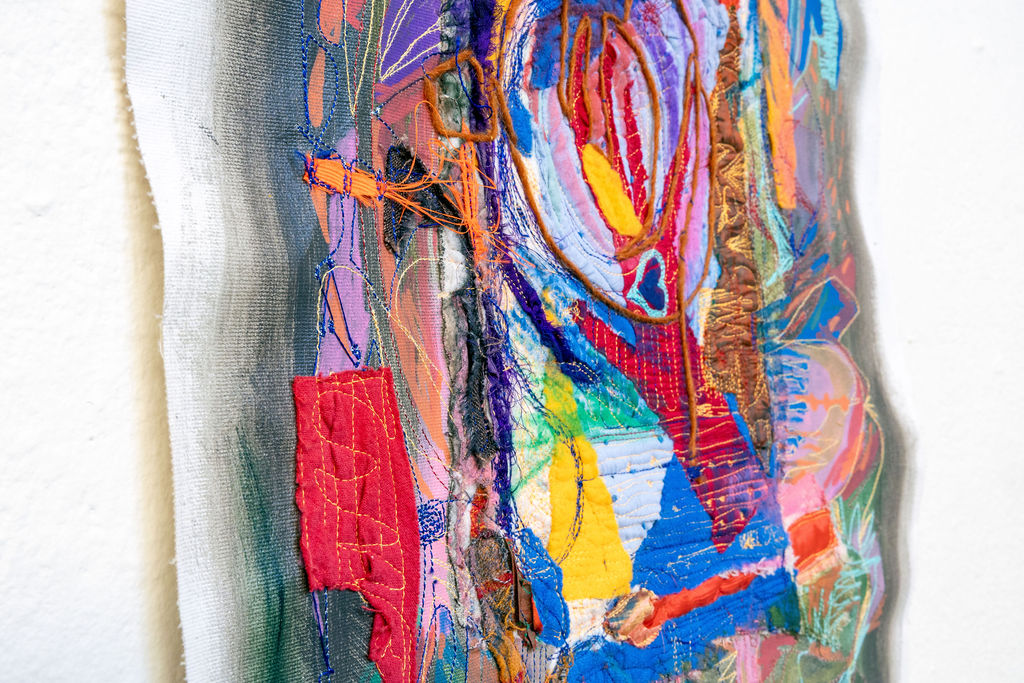
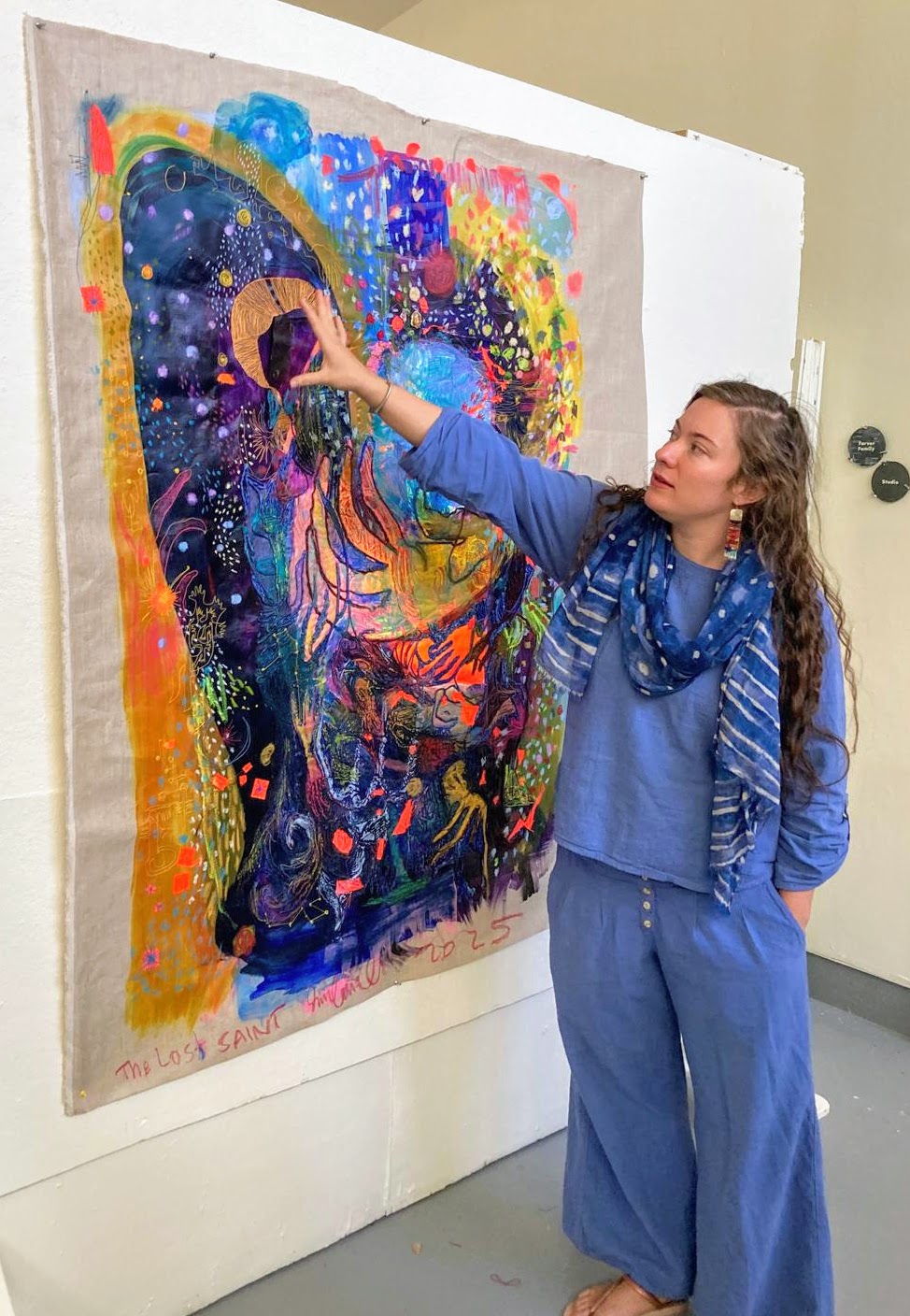
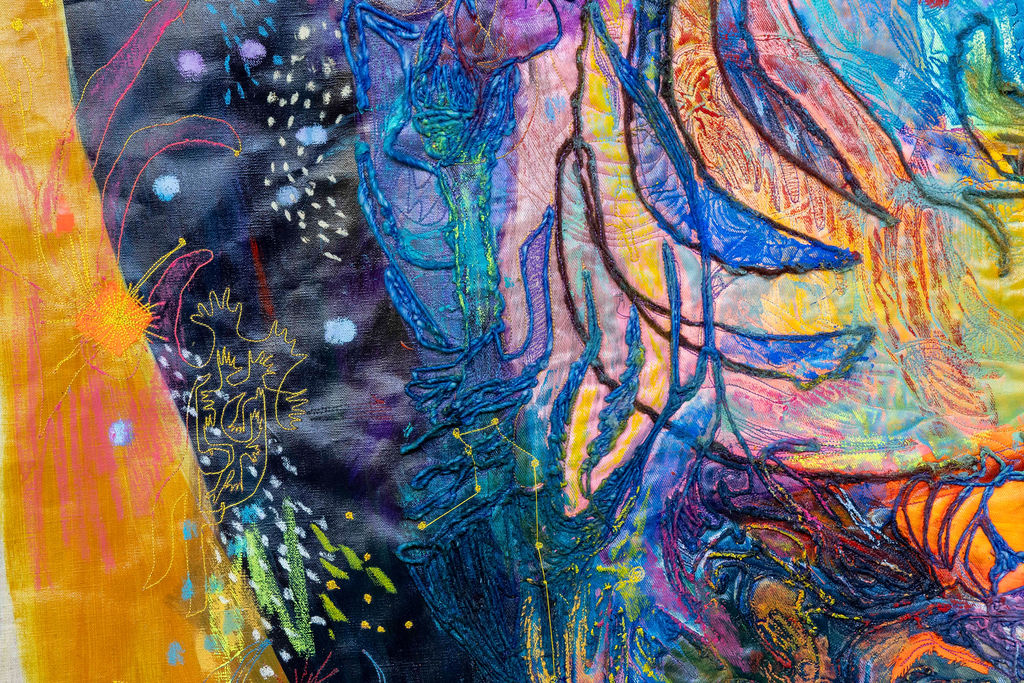
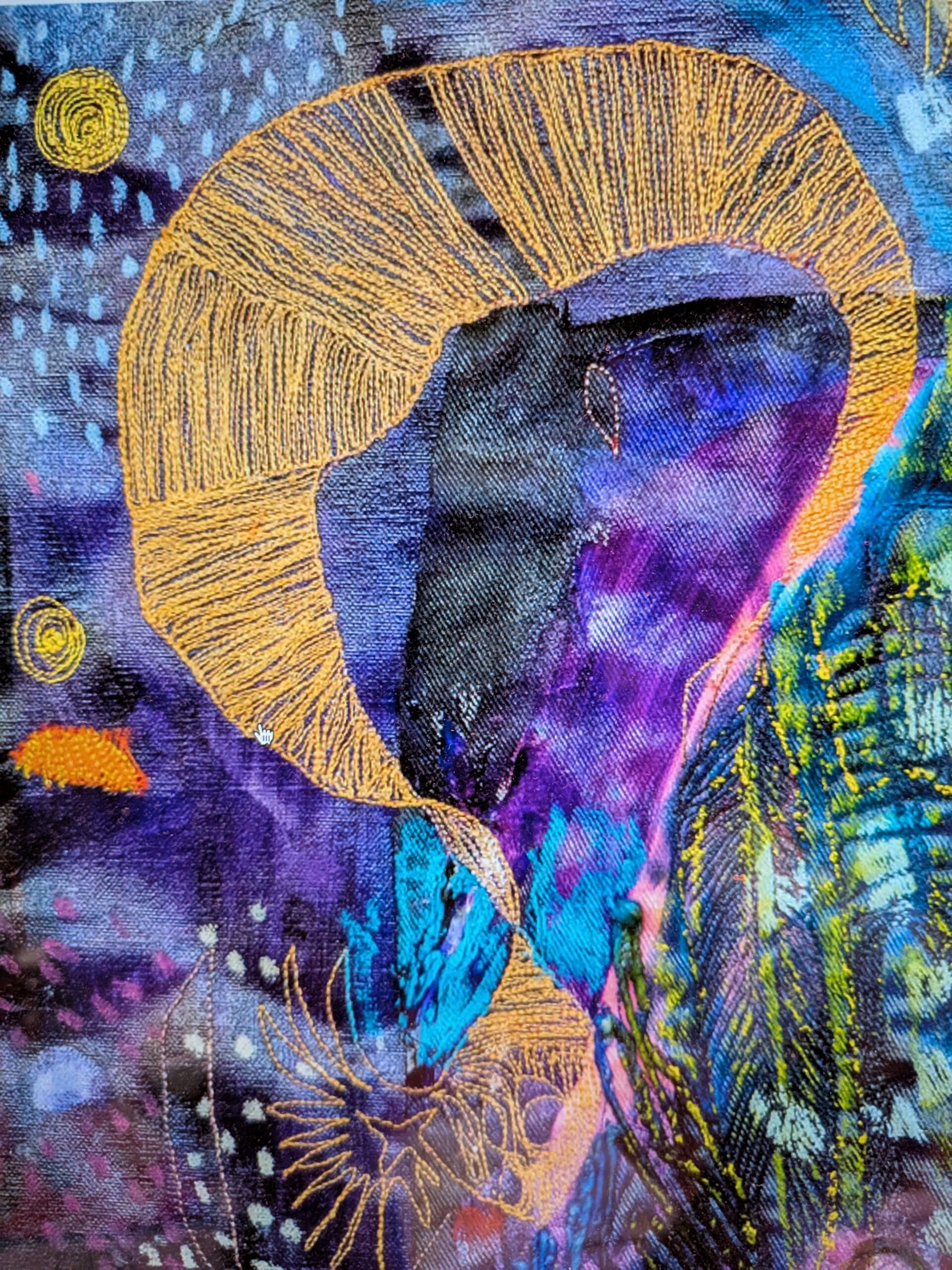
Two other works that also found their homes from my time in Aspen include The Lost Saint and For Mimi (both pictured below).
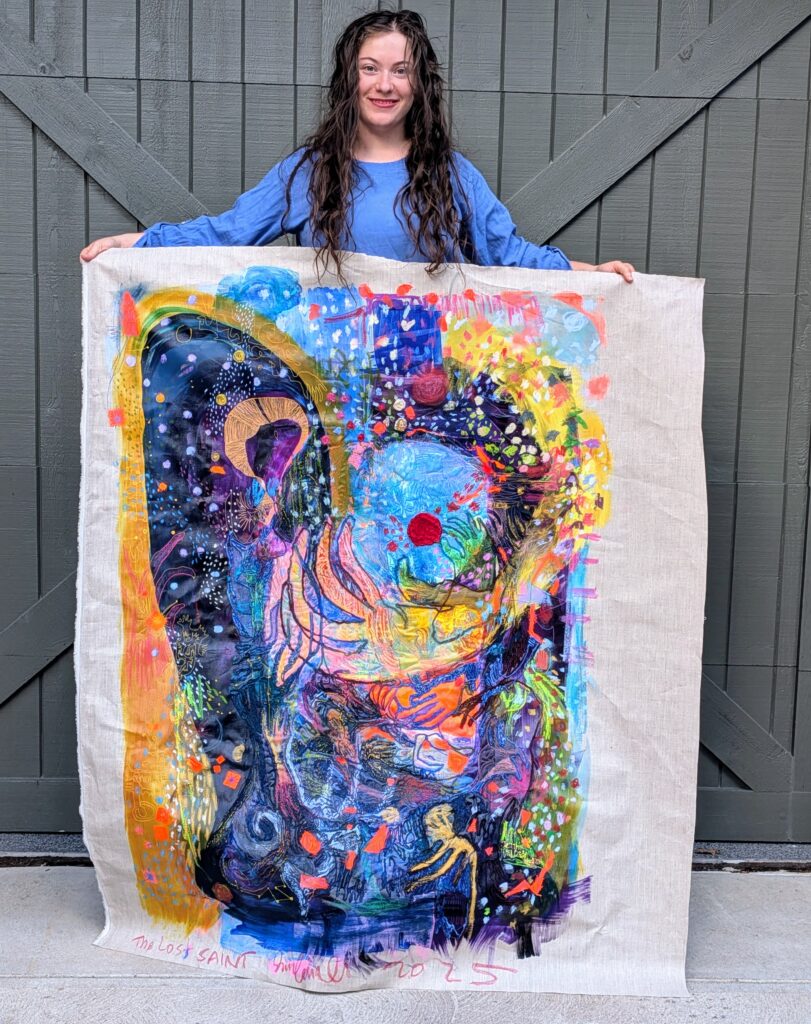
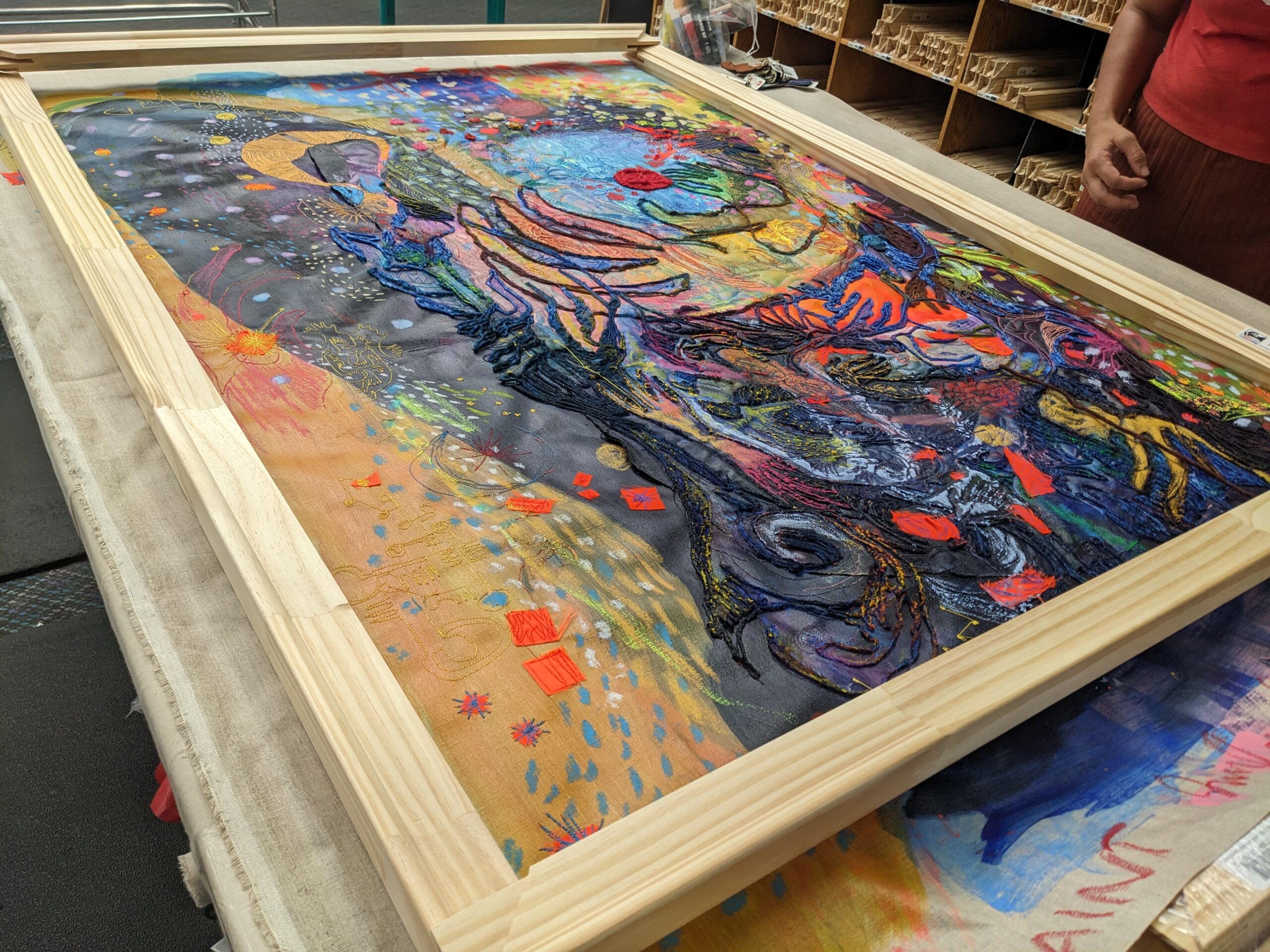
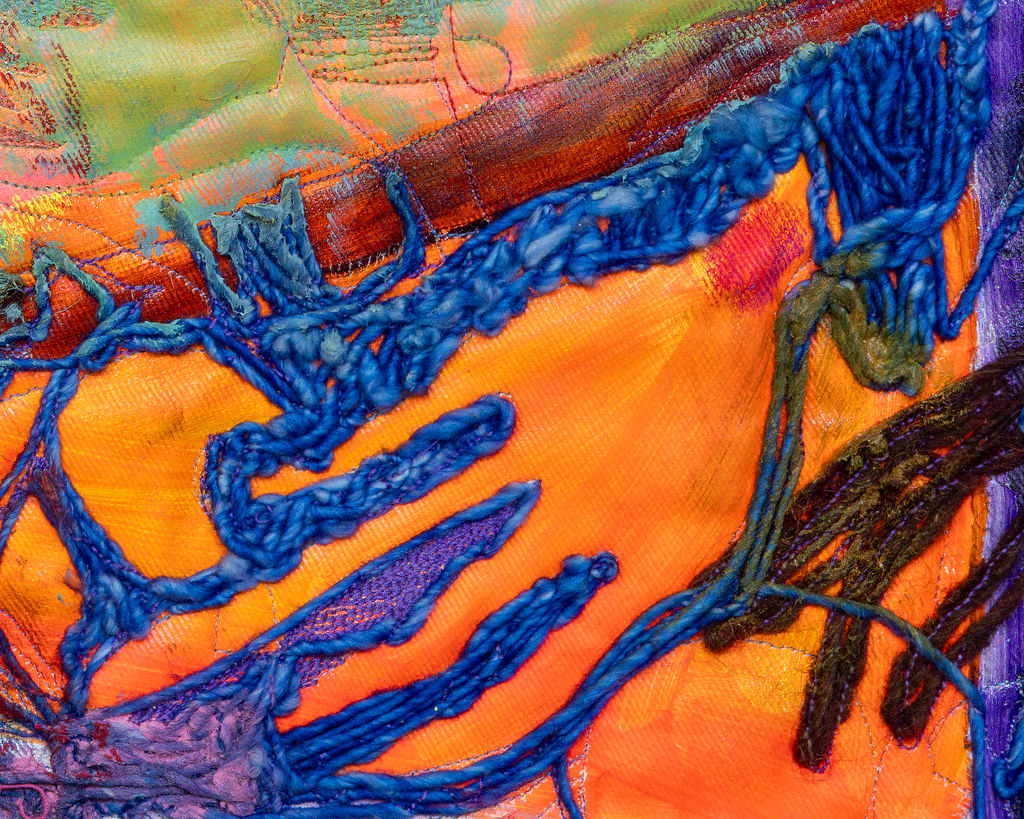
Description: The lost saint, with the golden stitched halo, seeks guidance with head turned upward toward stars. Surrounding the saint is a portal/doorway in yellow. A blue moon form in the center right holds forms of flora and human hands, and red spots in pigment stick and wool. Beneath the moon: a web of hands reaching. Hands on top of hands and hands within hands. Blue wool malbrigo yarn draws over high-chroma orange space at center right. A smaller being in the lower right center moves left. Above the figure and below the orange, the outline of a fetus. To the right of the figure and highlighted in pigment stick is the artist’s stitched signature and date of the artwork. Constellations of stars throughout. Upper left a bright orange home form. Lower left: webwork layers of dark space and hands and pieces of orange. At lower hem of linen substrate, scrawled in the artist’s hand, reads: THE LOST SAINT JENNIFERNWELDEN 2025
Detail shots:
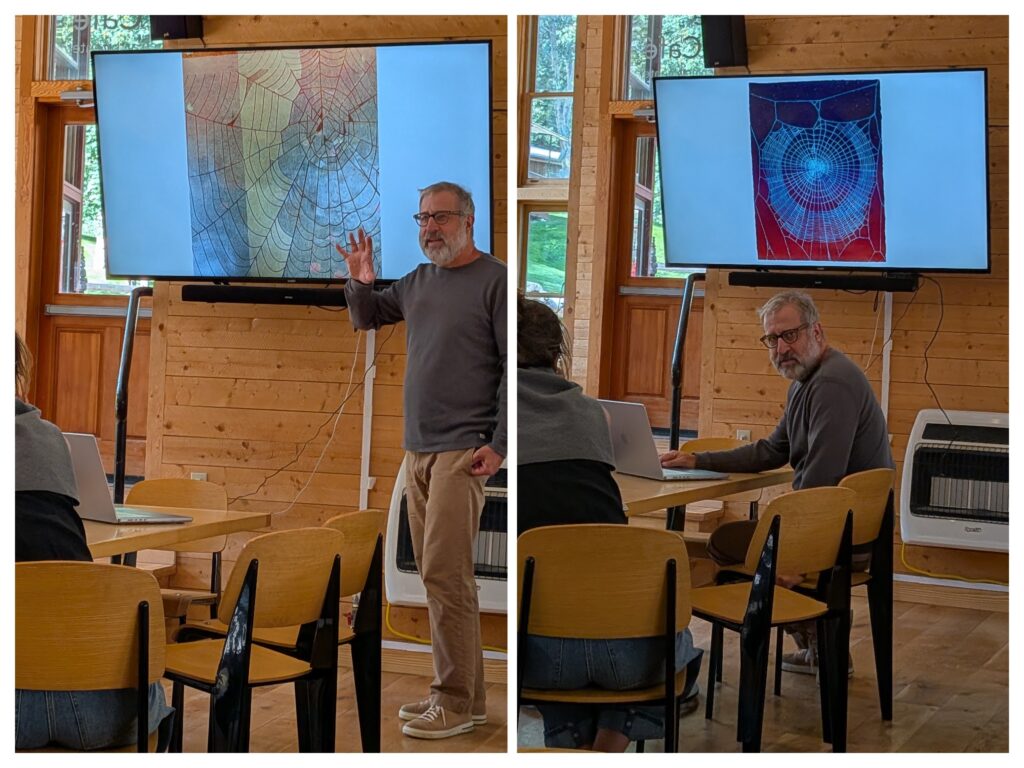
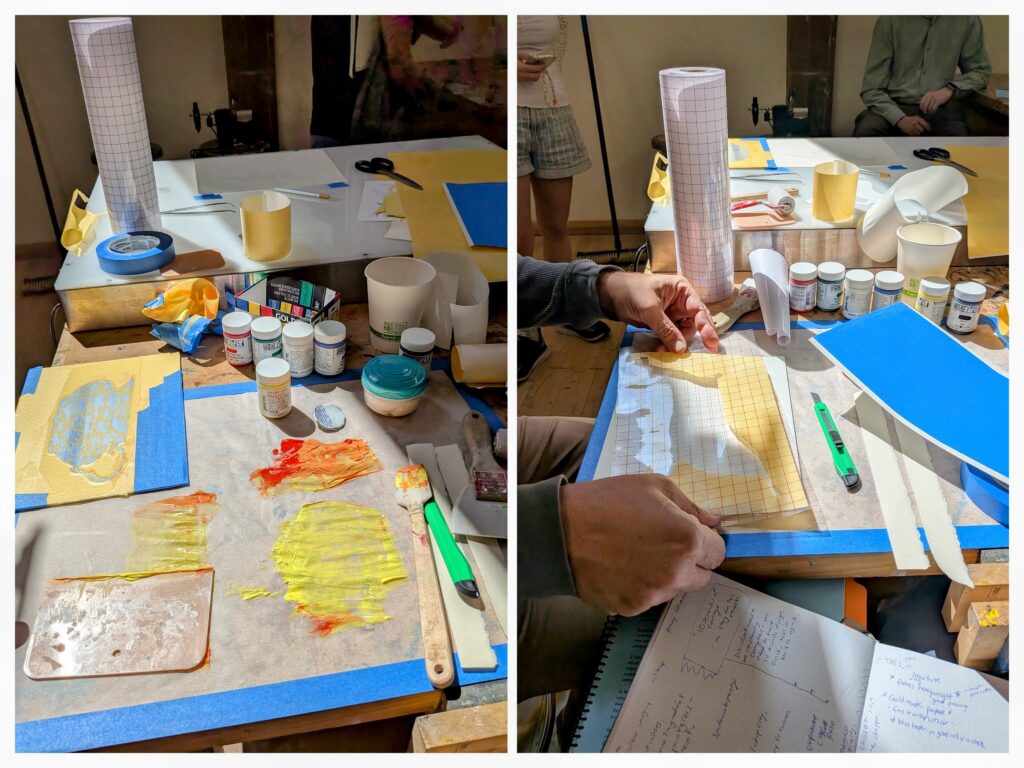
Whispers of Meaning with Michael Krueger
During my recent time working at Anderson Ranch, I had the opportunity to work more closely with Michael than I had in the past, and was I delighted when his process of the creation of Dusk appeared in his lecture slides!
The Artist is the Asset with Jasmine Wahi
After Michael’s Workshop, I continued my stay at the Ranch for a Masterclass called Career Momentum for Artists. The course covered all kinds of business-related topics not taught in art schools, and I would love to teach a version of it someday, as artists desperately need this information.
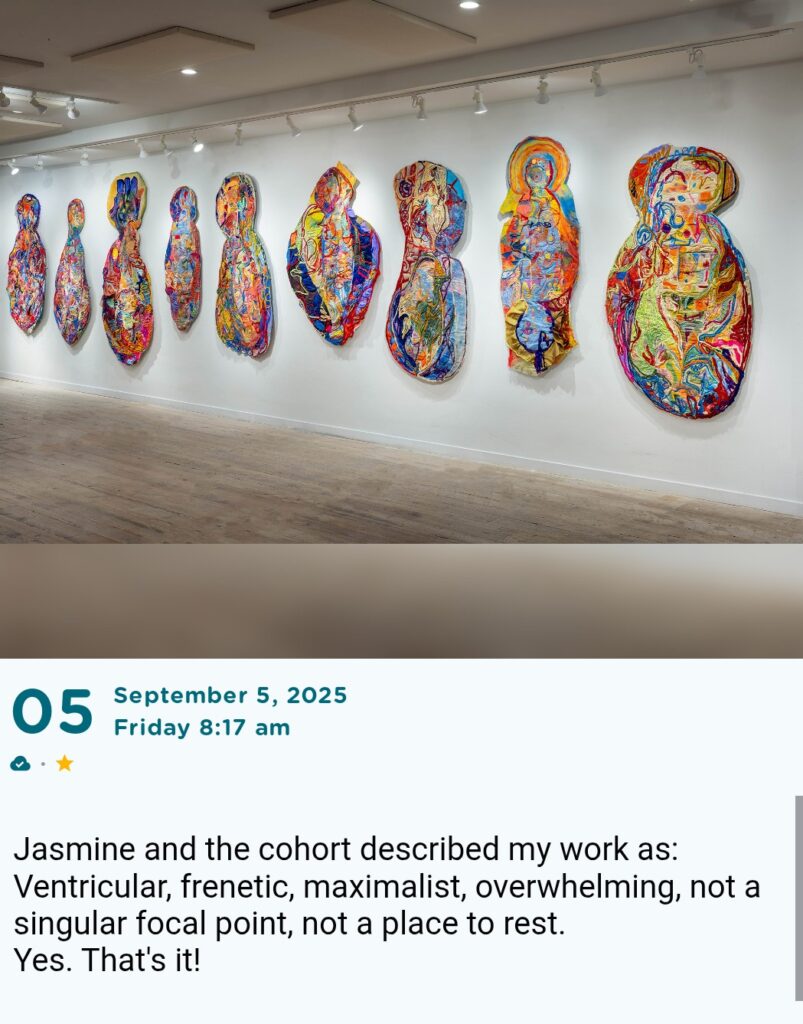
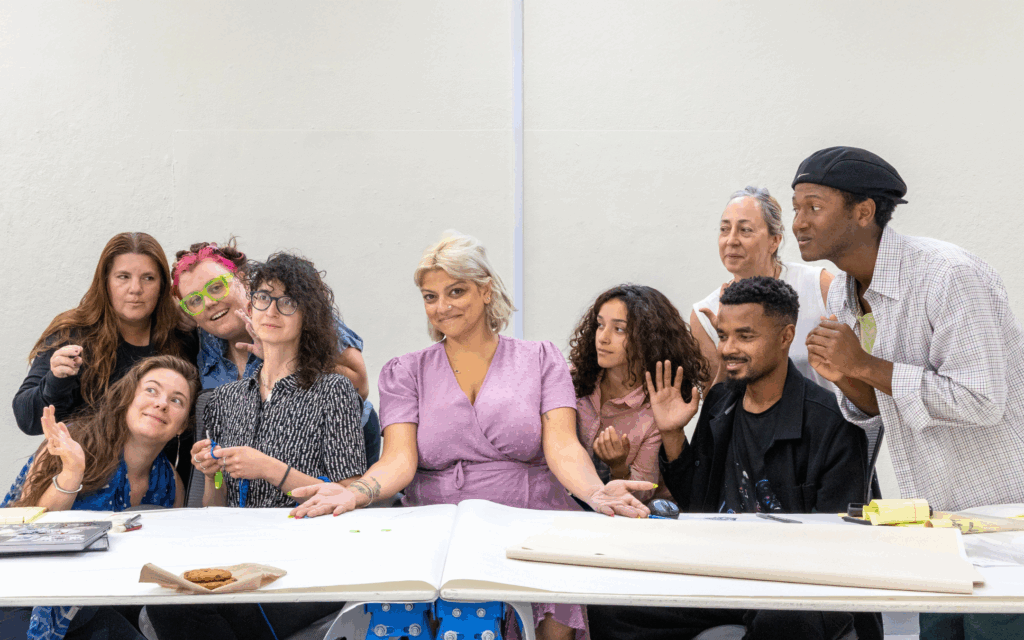
“Everyone loves the art; Nobody loves the artist,” Jasmine would say as she spoke about pricing, contracts, secondary markets, residuals, etc, –which all tend to be structured to sustain everyone except the singular artist making it all possible.– These predominant structures need to centralize around the artist. “The artist IS the asset,” she said. Her course was oriented on helping us as artists keep that in mind as we do business in a greedy world that assumes ownership of us and our work.
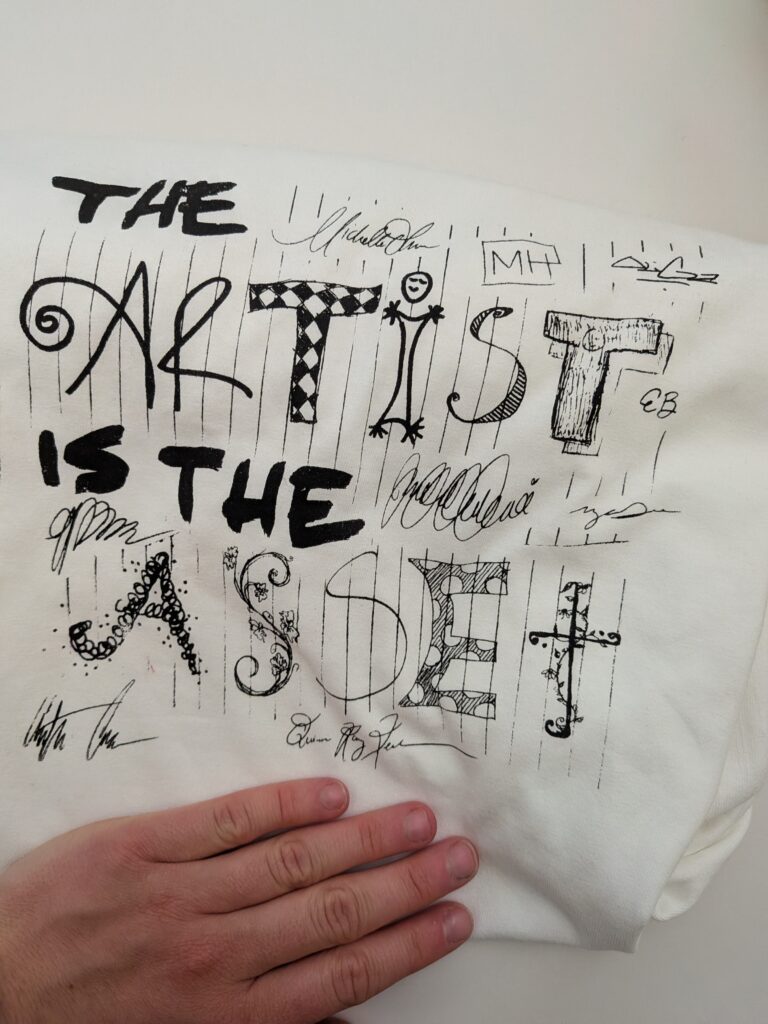
“Without artists, many people who make crazy money on the backs of artists would lose their livelihoods. I for one wouldn’t have a job,” she said (she is a curator based in NYC). Without artists, the art world stops. Furthermore, society as we know it would die.
How to protect and sustain the artist herself?
Creating Artist-Forward Spaces
Over the course my time at the Ranch, the buildings themselves were their own curriculum: teaching and inspiring me each day. I’m utterly obsessed with architecture on a personal front, and I was constantly studying the many structures of this utopian built environment. It’s impact on me burns even brighter now than the workshops I took.
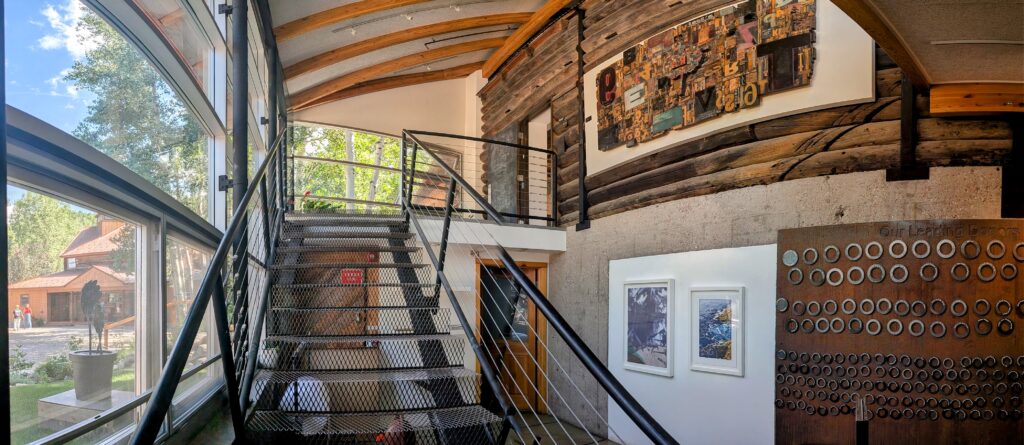
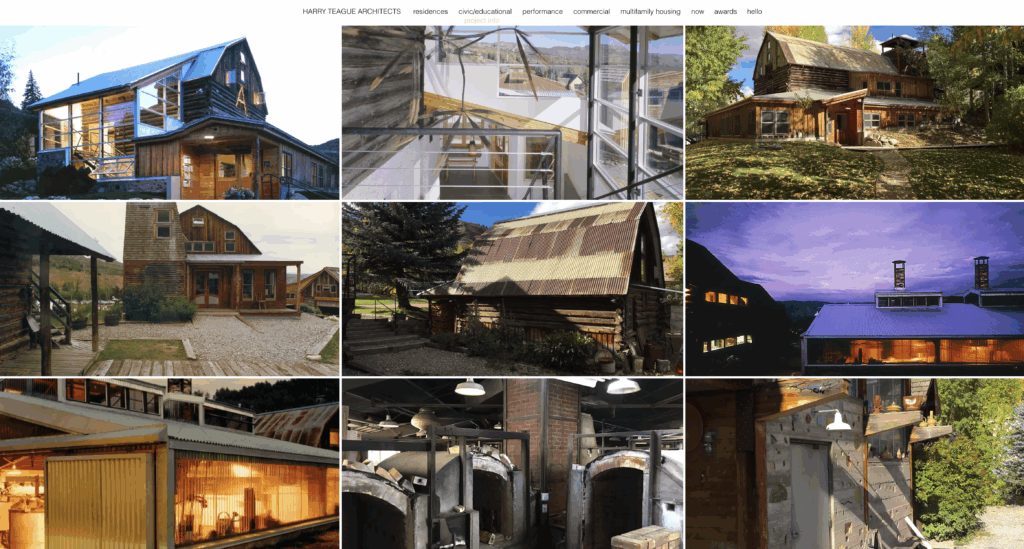
Once home, I researched the design scheme and learned that eleven new or adaptive reuse buildings were created for the original working ranch campus by Basalt-based Architect, Harry Teague and his firm.
“One of the keys to the success of the Ranch as an institution is that it encourages interaction between artists and crafts people working in different media. The layout and character of the buildings and spaces are carefully considered not only to enhance but to cause those personal interactions.” -(Harry Teague Architects website)
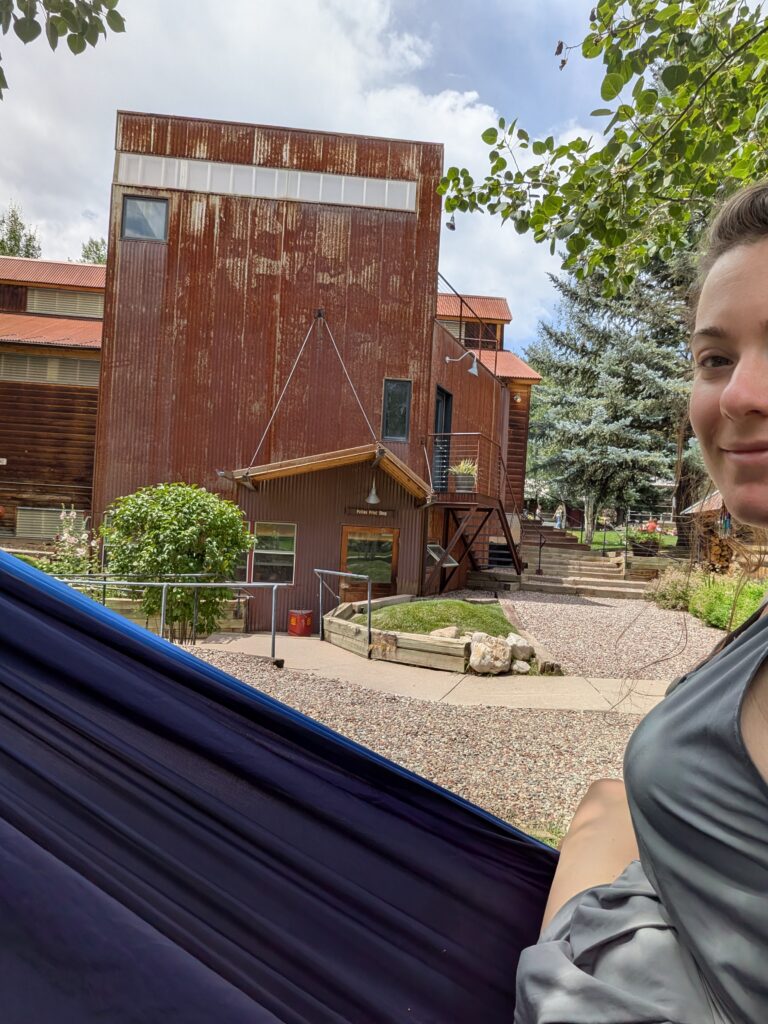
Architecture creates pattern and ritual. It literally shapes how you live your life, down to the tiny momentary details.
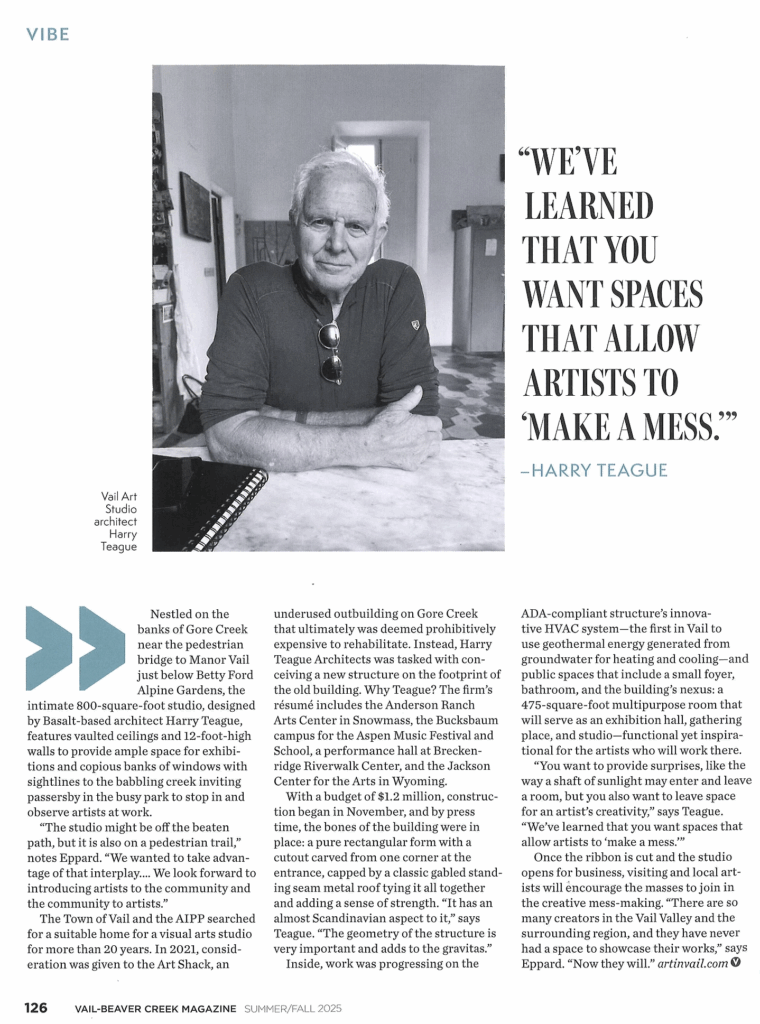
You recently asked what I’d be if I wasn’t an artist; I’d be an architect. I love what Teague says here about his recent Art Studio Achitecture project for the city of Vail:
Fall 2025: A Commute through the Continental Divide